
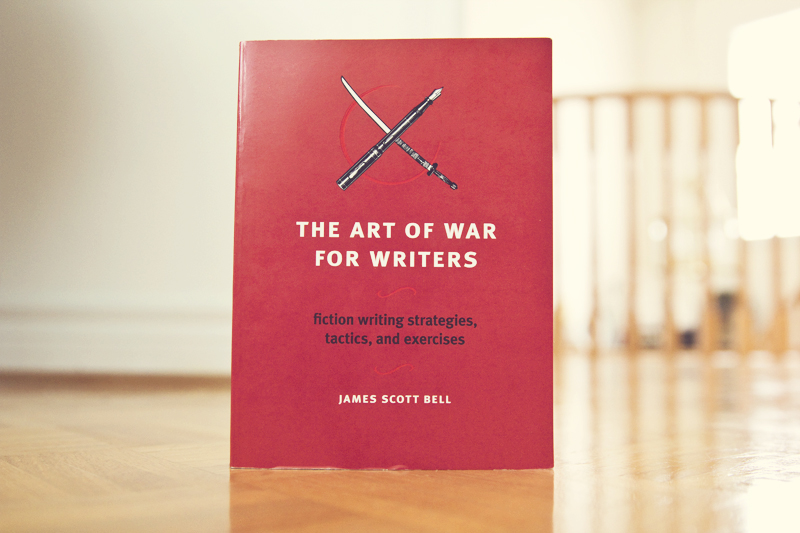
The Art of War For Writers

IMG_3718
I’ve never really considered myself to be a writer. I sort of just fell in to it through blogging. I’m continually growing, finding my style and turning to others for inspiration. I read obsessively about anything and everything.

I picked up The Art of War for Writers, mostly because it would look awesome on my someday office desk. It wasn’t until recently that I picked it up and read it.

The little reference book by James Scott Bell focuses mostly on novel writing but a lot of it can be applied to other circumstances. Like the title of the book hints, it compares writing a novel and getting it published to fighting in a war.
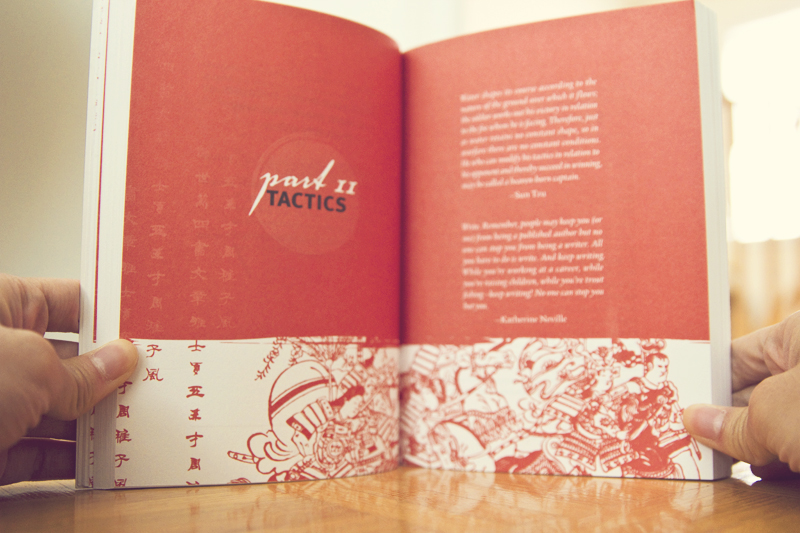
IMG_3721
There are three sections in the book. Reconnaissance deals with the mental game of writing. This was probably my least favourite section as I found it obvious and fluffy. It might be a proper push for those who are afraid to write in fear of judgment. As a blogger, I feel like this fear is close to non-existent or I wouldn’t be a very good blogger.
IMG_3722
The Tactics, the most resourceful section, is loaded with tips to improve as a novel writer, many of which can be translated into writing in general. One of my favourites tips is when you have writers block, call on a word and its cousins (synonyms or related words). They can strangely open you up to new pathways.

The final section is Strategy, where Bell gives tips on entering the publishing world including finding the right agents.

The book reads a lot like a series of 78 short blog posts. They get the point across and there are plenty of examples from existing fiction. I recommend this book to any writers (not just fiction) looking for quick tidbits of inspiration. Bonus, the book has a lovely design.
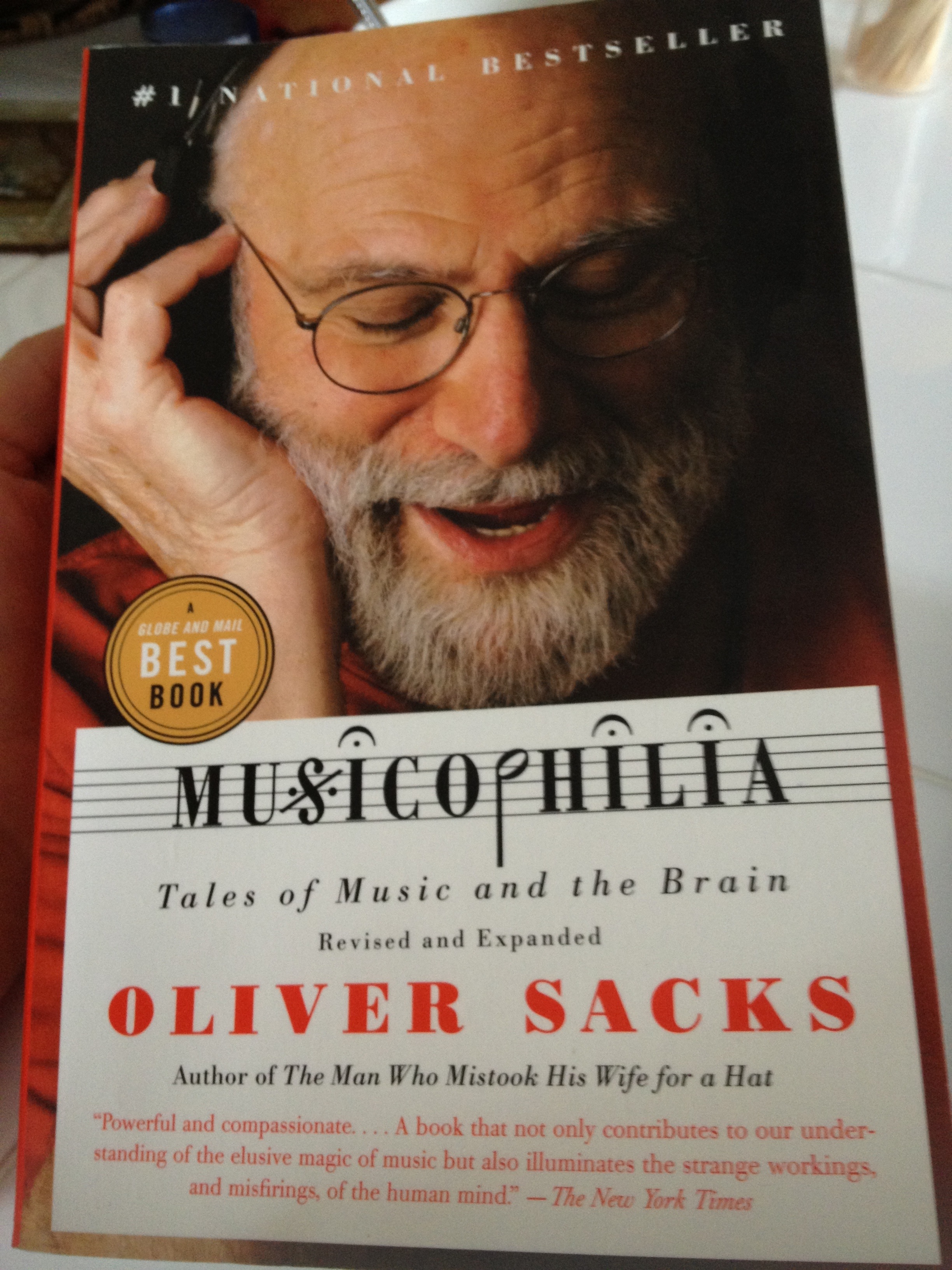


Musicophilia- Tales of Music and the Brain by Oliver Sacks


Musicophilia a book by neurologist Oliver Sacks had been a compulsive buy a year ago. Anything to do with music and the brain I find fascinating but a busy schedule had turned me away from a book that was 424 pages long and what I presumed would be written in flourished language.

I was surprised to find that it was written in a very easily digestible manner and extraordinarily fascinating. Sacks explored in great detail people’s mental afflictions and the heartbreaking affect music had on these people. I thought it was extremely spell-bounding how those who couldn’t even add 5 + 3 were exceptionally musical.

Musicophilia has 4 different sections full of their own emotionally drenched stories:
1. Haunted By Music– those that have very little control over the music in their lives.
2. A Range of Musicality– exceptionally musical people despite other impairments.
3. Memory, Movement and Music– music inducing memory and movement.
4. Emotion, Identity and Music– those that hardly know who they are but connect with music.

I have the “Revised and Expanded” edition so there are footnotes as long as half the page. They often include updates on his patients as well as easy to understand definitions of medical afflictions and terminology that the reader may not have known. Those who have a passion for psychology or cognitive science may find this book mesmerizing. There are plenty of examples that demonstrate the thought-provoking and mysterious powers of music. I don’t want to reveal too much in case you plan to read this book. One thing of note is that it is sub-titled Tales of Music and the Brain so expect it to be very anecdotal and not necessarily filled with tons of scientific analysis as one would presume in a cognitive science book.

Musicophilia really made me wish I had seriously considered pursuing (or perhaps continuing studies for) a degree in Music Therapy.