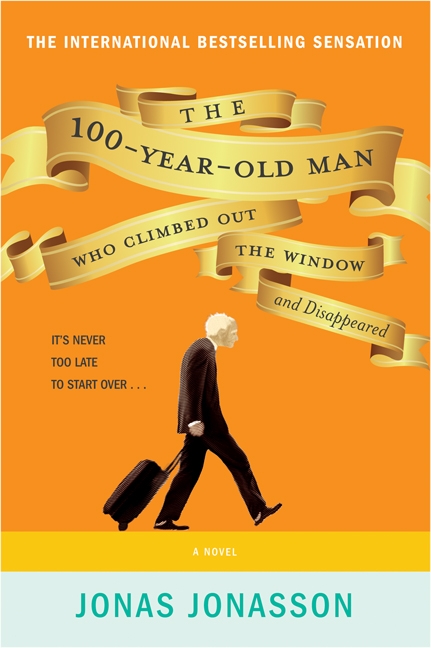
The 100-Year-Old Man Who Climbed Out the Window and Disappeared

100yearoldman It’s never too late to start over. Even if you are an 100 year old man who is stuck in a nursing home. That’s the premise of of this Jonas Jonassan novel.

100 year old Alan jumps out the window in the beginning of the book and gets himself into a wild and somewhat absurd adventure. The chapters alternate between the adventure and telling the entire history of the 100 year old man’s life up to the point where he jumps out the window. The style of writing was adorable, but quite simple third person style with short sentences.

Alan’s life story delves with a lot of world history (partially fictional of course). As a person who has never quite been into politics and history, I learnt a lot of the political view points of past world leaders. I wish high school history was this exciting, or had elephants.

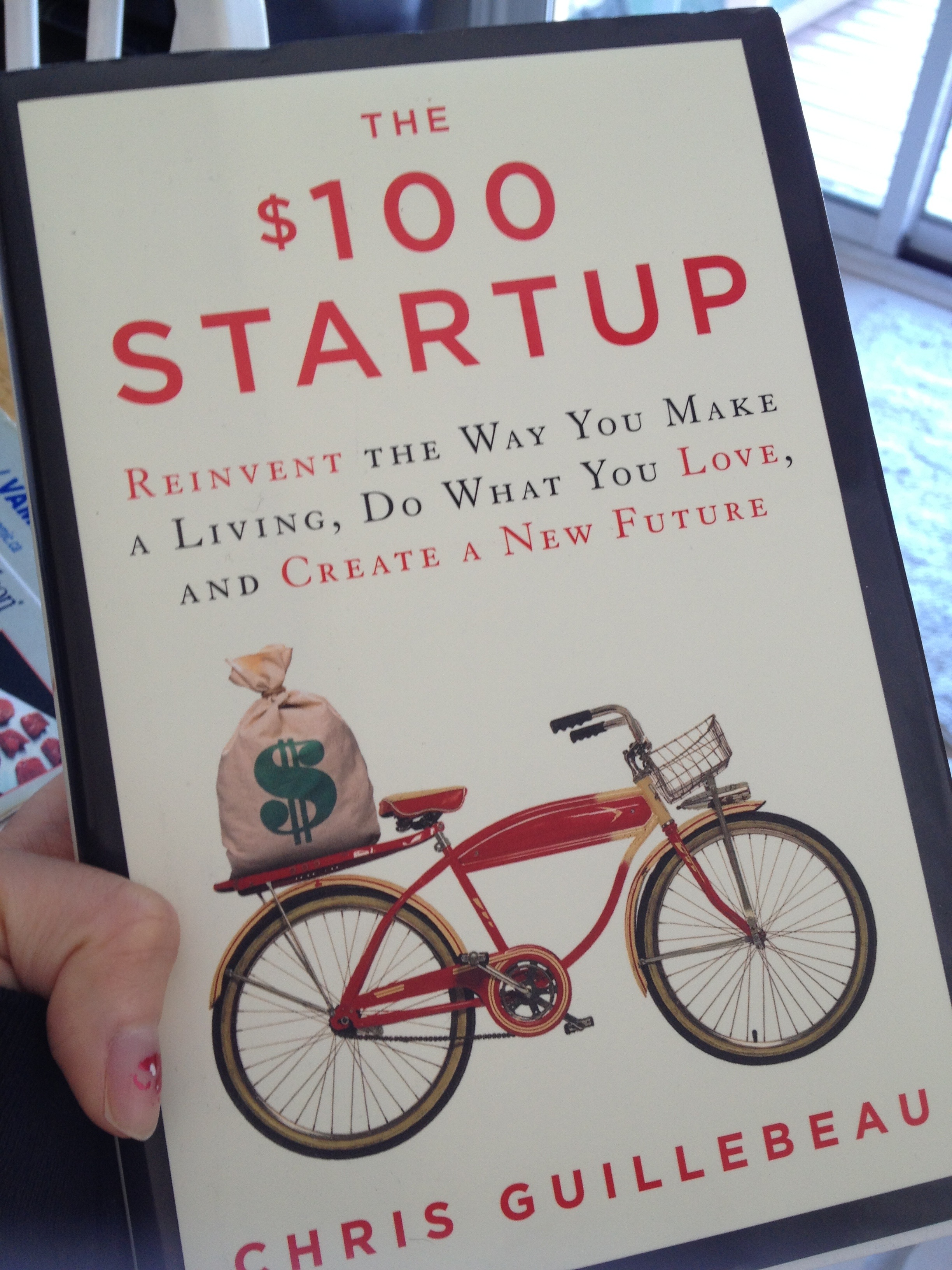
The $100 Startup

20130124-103139.jpgI recently read Chris Guillebeau’s book The $100 Startup. It had a lot of stories and anecdotes of entrepreneurs which make a decent living (50k or more) doing what they love. What I enjoyed about the book is that it didn’t just focus on multi-million dollar startups like Facebook, but ones from regular people.

The book also has a short exercises for people interested in starting their own business. I emphasize short because the main message of the book is not to ponder forever on if you should do something, but to just do it.
Guillebeau mentions this quote by Karl Marx:

“Catch a man a fish, and you can sell it to him. Teach a man to fish, and you ruin a wonderful business opportunity”

I thought this was an interesting way to think of things. Consumers will buy things because they are easy and convenient. People don’t go to a restaurant because they want to be taught how to make the dish. Regardless of whether you currently have a business idea or not, the book is an inspiring read and makes you re-think what it means to be happy in life. Is it money or thought of doing something you love?

I know somewhere down the line I will probably have my own business and I will definitely give this book another read.

Dear J.K. Rowling, Stop Ruining Books

jkrowlingThis post isn’t really about the fact she killed some of the best characters in Harry Potter, but I thought she wasn’t going to do that again. Dear JK Rowling, The Casual Vacancy was a horribly written book.

I always finish books, so I have read the entire thing cover to cover. The characters, although living in a fictional society seemed like they were meant to be realistic. After all, she was trying to prove she could write an adult fiction novel that didn’t involve wizards and magic. However, Rowling draws stereotypes to their extreme. There’s the kid who thinks too much about being “authentic”, the kid who lives in a house of domestic abuse, the poor child living in the drug-addict ridden neighbourhood etc. It’s not even creative and the events in the book seem to be put in for mere shock factor. Drugs, rape, violence, deaths, infidelity.. basically the whole 9 yards.

Most of the book is about people being petty and selfish eventually succumbing to their desires. The children also enjoying ruining the lives of the adults and there is no resolution for these problems.

You come to really care for this one troubled teen with a drug addicted mother and get tricked into thinking her life will be better in the end. BUT THEN SHE FUCKING DIES. I’m not one to judge graphic content matter in a book, but all of the events in The Casual Vacancy were pointless. They didn’t lead anywhere or teach anything. I’ve read books that made me cry or made me think deeply about a subject. This book just left me vacant. Maybe that was what she wanted. Haha, you got me J.K. Rowling.

Let’s Pretend This Never Happened

letspretendI don’t think I truly knew what embarrassment meant until I read Jenny Lawson’s Let’s Pretend This Never Happened: (A Mostly True Memoir). Thank you Jenny for some roll on the floor laughing moments. Certain parts of the book (actually most of it) seemed so outrageious, but at the same time it was way too detailed and strange to be made up. Like the time she stuck her arm up a cow, or got stabbed by chicken.

The book teaches some valuable life lessons especially to be proud of who you are. Jenny suffers from rheumatoid arthritis, OCD, depression and anxiety, but she makes people laugh and isn’t afraid to share her unfortunate stories of both her past and present with the world. She loves the life that has shaped her into who she is today.

I have now become a follower of her blog The Bloggess. It is equally as hilarious as the book and really motivates me to share some silly stories from my past that were no where near as personal or embarrassing. She would probably think I’m crazy for saying her book is an inspiration.


Hikari Oe and The Music of Light

20130109-111217.jpgAfter reading Oliver Sacks’ Musicophilia, my boyfriend lent me The Music of Light- The Extraordinary Story of Hikari and Kenzaburo Oe written by Lindsley Cameron. It chronicles the life of Hikari Oe, a boy who was born with a growth on his brain the size of almost another brain. His father Kenzaburo Oe after much thought and reflection decided to operate on the growth and Hikari survived. However, he suffered a form of autism, vision loss and constant seizures. Despite not being able to absorb knowledge and learn everyday tasks like most people, Hikari became one of Japan’s most renowned composers.

The book dealt thoroughly analyzed the connections between Kenzaburo Oe’s writing who was deeply inspired by Hikari and used it to tell the story of their lives. While very interesting, some of the book was rather repeated with sometimes entire section being stated again somewhere else in the book. In addition to telling the story of their lives, it also analyzes musical savants (even quoting some of Sacks’ work) and how Hikari is different from the norm because of his ability to compose music. Overall the book rejoiced on the positive qualities of Hikari’s condition.

I looked up some of Hikari Oe’s music after reading this book and found it simply beautiful. It is not over complicated and often inspired by music of classical composers like Mozart. It has a lovely calming effect.

I Don’t Have A Cat But…

I have a new found appreciation for cats. As you know, I am a proud dog owner. Previously, I was not very fond of cats. I always thought they were rather frightening, unkind and boring.

By some strange coincidence yesterday, I read I Could Pee on This: And Other Poems by Cats by Francesco Marciuliano and The Oatmeal’s How to Tell If Your Cat Is Plotting to Kill You.

catplot

I read How To Tell If Your Cat is Plotting to Kill You first. To be honest I wasn’t a big fan of The Bobcats mini-series that focused on these cat characters being jerks in the workplace. The majority of the book was devoted to this “mini-series”. For something by The Oatmeal creator, it was somewhat of a let-down.

My favourite illustrations were the other sections such as if humans and cats changed roles and the comic strips illustrating the much more realistic behaviour of cats. Of course there was also classics like Cats vs. The Internet and How to Pet a Kitty.


i could pee on that

Marciuliano’s book explored the mind of a cat through a series of hilarious free verse poems. There are four categories of poems: family, work, play and existence. 

If I had to buy a book for a cat lover it would be this one. The poems illustrate why cats do certain devious things and that perhaps we are misunderstanding them as human beings. Most of the poems start off in a vague manner and it is not until the end that you understand what the cat is doing; whether it be knocking down a vase or scratching itself in the mirror. In between poems there are also adorable cat photos related to the writing.

I don’t plan on getting a cat any time soon (or ever), but in reading these books I definitely don’t think they are boring anymore. On a random note, if you do like cats I found this random site called Catmoji which is like a Pinterest for cats.

Zombie Spaceship Wasteland

20130103-125800.jpg
Did you know Patton Oswalt was the voice of Remy from Ratatouille? Also he wrote this book called Zombie Spaceship Wasteland. What is this book about? That is a question that is very difficult to answer. The book is about many things, and at the same time nothing at all. Each chapter there is a new theme, a new story, idea, joke. However it is guaranteed that you will end up laughing your ass off at some point or another.
Without revealing too much, there are parts of the book that deal with Oswalt’s earlier experiences as a comedian, which are rather dark. He also takes lessons from REM lyrics. However the rest includes everything from hobo songs to my favourite section of horrible screenplays written by Erik Blevins. Someone PLEASE make a Slade Ripfire movie.

If you are into Patton Oswalt’s comedy, you’ll love this book. Here’s a really random Patton Oswalt video that has nothing to do with the book:

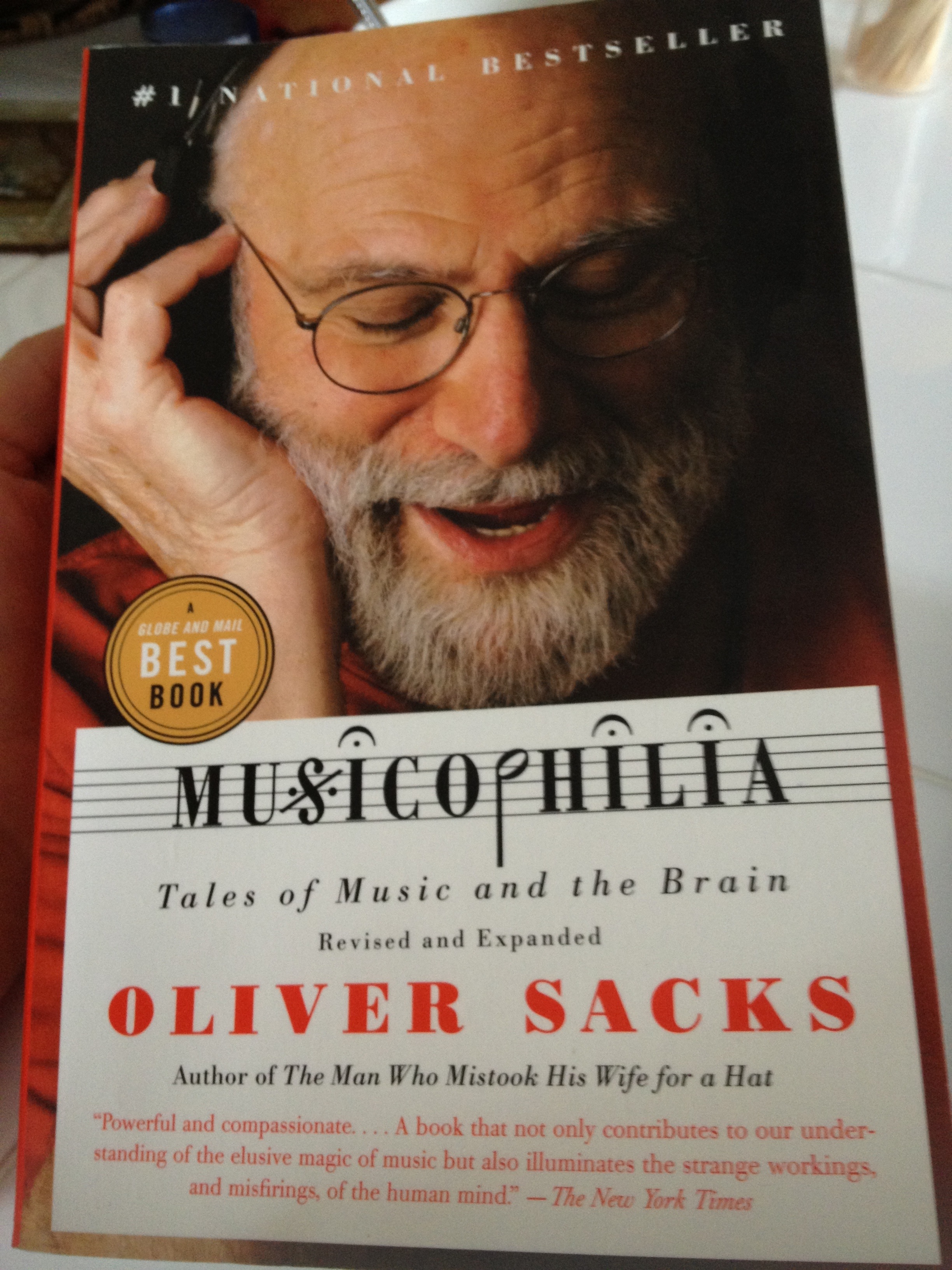
Musicophilia- Tales of Music and the Brain by Oliver Sacks


Musicophilia a book by neurologist Oliver Sacks had been a compulsive buy a year ago. Anything to do with music and the brain I find fascinating but a busy schedule had turned me away from a book that was 424 pages long and what I presumed would be written in flourished language.

I was surprised to find that it was written in a very easily digestible manner and extraordinarily fascinating. Sacks explored in great detail people’s mental afflictions and the heartbreaking affect music had on these people. I thought it was extremely spell-bounding how those who couldn’t even add 5 + 3 were exceptionally musical.

Musicophilia has 4 different sections full of their own emotionally drenched stories:
1. Haunted By Music– those that have very little control over the music in their lives.
2. A Range of Musicality– exceptionally musical people despite other impairments.
3. Memory, Movement and Music– music inducing memory and movement.
4. Emotion, Identity and Music– those that hardly know who they are but connect with music.

I have the “Revised and Expanded” edition so there are footnotes as long as half the page. They often include updates on his patients as well as easy to understand definitions of medical afflictions and terminology that the reader may not have known. Those who have a passion for psychology or cognitive science may find this book mesmerizing. There are plenty of examples that demonstrate the thought-provoking and mysterious powers of music. I don’t want to reveal too much in case you plan to read this book. One thing of note is that it is sub-titled Tales of Music and the Brain so expect it to be very anecdotal and not necessarily filled with tons of scientific analysis as one would presume in a cognitive science book.

Musicophilia really made me wish I had seriously considered pursuing (or perhaps continuing studies for) a degree in Music Therapy.

JPod – Douglas Coupland


Recently I read Douglas Coupland’s JPod and thought that it would be more appropriately titled “I FUCKIN’ HATE DOUGLAS COUPLAND!!!”.

The reason for this is he writes himself in as one of the book’s most annoying characters. He makes references to himself at the beginning and then appears at very odd moments during the book. The plot in the 3rd part of the book revolves around the main character’s (Ethan) friends and family talking about this secret project with Coupland that is completely confidential. Ethan is left out of this investment until the very end. When you find out what it is (an electronic globe of some sort), it is an underwhelming end to the book. What does a globe have to do with a group of people who code and create video games?

This book left me a bit conflicted. While it was a very and fun read, the plot left me underwhelmed and disliking the author. I’m not sure if that was Coupland’s intention, but if it was than he was successful. It was really fun to follow jPod’s office antics. The characters themselves were all damaged and unique in their own special way. The things that happened were extreme and took really unexpected turns. Some things were blown out of proportion though and in some ways I wish the story was more believable. Maybe he was aiming for that “WTF” factor but it resulted in the book having very little substance.

Ethan’s mother runs a marijuana grow-op and gets herself into trouble with men (and women) who fall in love with her. His father is a wannabe actor who has an affair with Ethan’s schoolmates. His brother sells sketchy real estate. They all become friends with an Asian mobster kingpin in charge of human trafficking. Entertaining, but bizarre. I just wish the end had more meaning or point to it. In the end I was left unsatisfied.

The Book of Lost Things – John Connolly

At first glance, The Book of Lost Things by John Connolly entices you with it’s beautiful golden cover and a leaflet that describes adventure. It appears to be a beautiful little fairy tale for children. However it is anything but that.

The book isn’t really geared towards children as there is plenty of violence and gore. In addition, the first half of the book I found really hard to get through because David, our hero, spends most of it mourning over the loss of his mother.

The book also ruins some classic fairytales by twisting them in morbid ways. There’s the Crooked Man who is a parody of Rumpelstiltskin, Little Red Riding Hood who had sex with a wolf and basically created the twisted “Loups”, a very obese Snow White and a few others.

This all just to teach a little boy that he should not hate his stepmother or be jealous of his step brother. It’s definitely a tale for adults who grew up on fairy tales and maybe explored the realms of Brother’s Grimm. It definitely wasn’t one of those you can’t put down type of books. Major plot holes were resolved in a quick manner towards the very end. In the end I was left unsatisfied.