
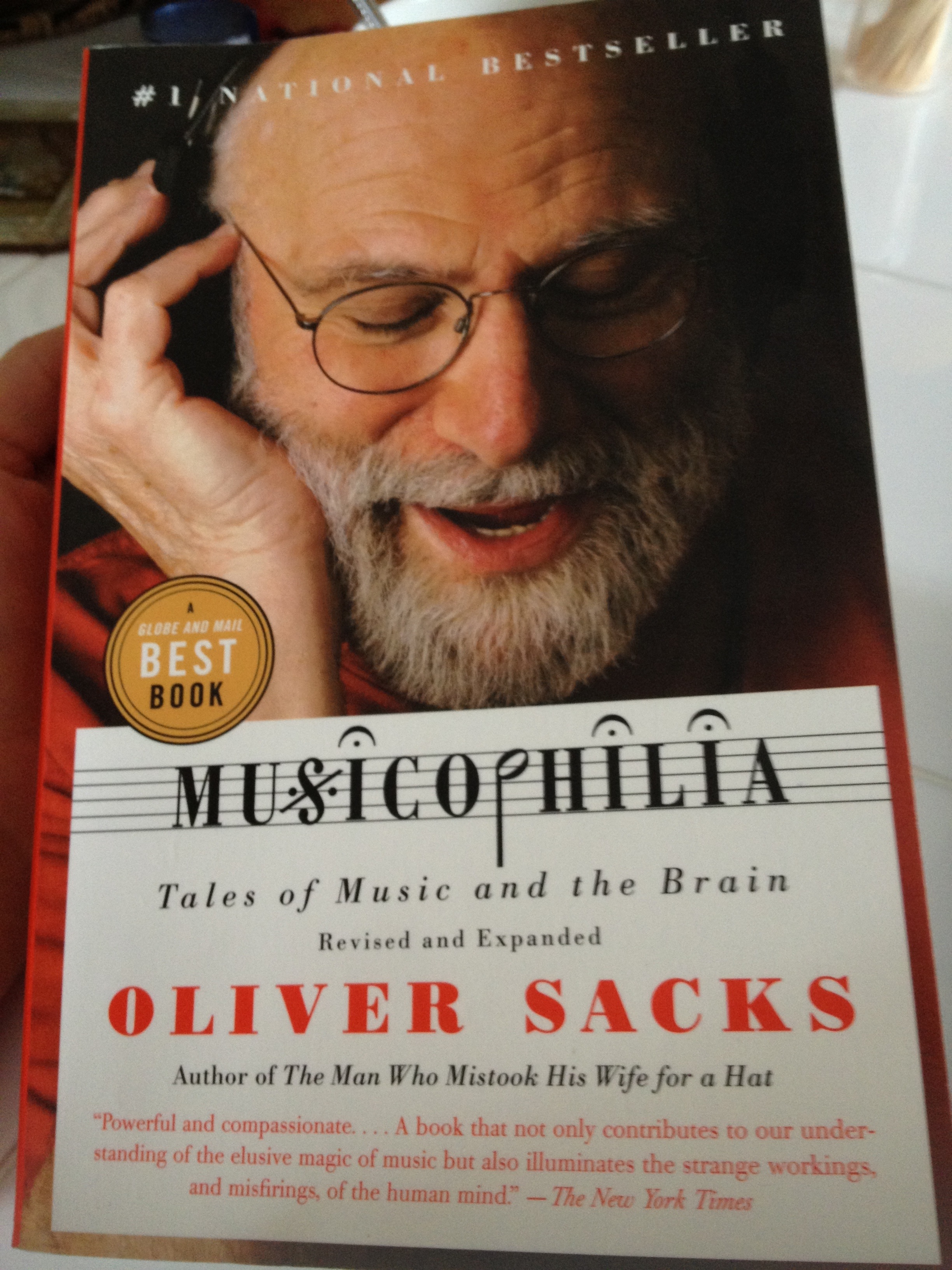
Musicophilia- Tales of Music and the Brain by Oliver Sacks


Musicophilia a book by neurologist Oliver Sacks had been a compulsive buy a year ago. Anything to do with music and the brain I find fascinating but a busy schedule had turned me away from a book that was 424 pages long and what I presumed would be written in flourished language.

I was surprised to find that it was written in a very easily digestible manner and extraordinarily fascinating. Sacks explored in great detail people’s mental afflictions and the heartbreaking affect music had on these people. I thought it was extremely spell-bounding how those who couldn’t even add 5 + 3 were exceptionally musical.

Musicophilia has 4 different sections full of their own emotionally drenched stories:
1. Haunted By Music– those that have very little control over the music in their lives.
2. A Range of Musicality– exceptionally musical people despite other impairments.
3. Memory, Movement and Music– music inducing memory and movement.
4. Emotion, Identity and Music– those that hardly know who they are but connect with music.

I have the “Revised and Expanded” edition so there are footnotes as long as half the page. They often include updates on his patients as well as easy to understand definitions of medical afflictions and terminology that the reader may not have known. Those who have a passion for psychology or cognitive science may find this book mesmerizing. There are plenty of examples that demonstrate the thought-provoking and mysterious powers of music. I don’t want to reveal too much in case you plan to read this book. One thing of note is that it is sub-titled Tales of Music and the Brain so expect it to be very anecdotal and not necessarily filled with tons of scientific analysis as one would presume in a cognitive science book.

Musicophilia really made me wish I had seriously considered pursuing (or perhaps continuing studies for) a degree in Music Therapy.

Being An Imperfect Musician


I played piano today, and I enjoyed it. This was a statement I had not been able to say for a long time.

Over a year ago I had posted about rekindling my love for the instrument, but it never really happened. Life got in the way- or so I thought.

I blamed a lot of not playing on being busy, which I was with various internships. I also pushed the piano aside because Teddy (my precious little puppy) hated the sound and would howl whenever any instrument was played.

Though the above were contributing factors, none of them really explained why I was avoiding the piano. The truth was that in fourth year after a rather disastrous jury, I was tired and frustrated at the piano.

I am a big cognitive science junkie. In Levtin’s book This is Your Brain On Music he talks about how 10,000 hours of practice makes a great musician. I calculated that if I started piano when I was five and averaged about 2 hours a day since then (with the long hours in my advanced years evening out the early years and holidays) that it amounted to something like 12,410 hours. This was approximate number of hours I had spent at a piano from when I was 5 up to the day of my piano jury when I was 22 (I am currently 24).

It was disheartening having put in more than the required 10,000 hours and be far from “perfect”. This anxiety had caused me to be afraid of performing in front of other people. “What if I mess up?” was a constant worry during the hours spent in university practice rooms. The consequence of this unease was more intense practicing and the development of carpel tunnel (which I am happy to say I don’t have any more).

Today I sat at the piano without too much thought about it. I picked up a book of Chopin waltzes and simply started playing. I realized some of my strengths:
1. I am a great sight reader.
2. If I played a song once, my fingers will remember it forever no matter how long it’s been since I last played it.

Though imperfectly, it was nice to be playing again, especially the music of my favourite composer. Now that I am out of school (and finished RCM exams), I don’t have to be playing under the pretense of needing to be perfect or performing for somebody else. I can also explore pieces that excite me and not have to drill them to perfection. I want to continuously enjoy performing for myself. And for me, imperfect is okay.

Acrobatic Mother’s Day

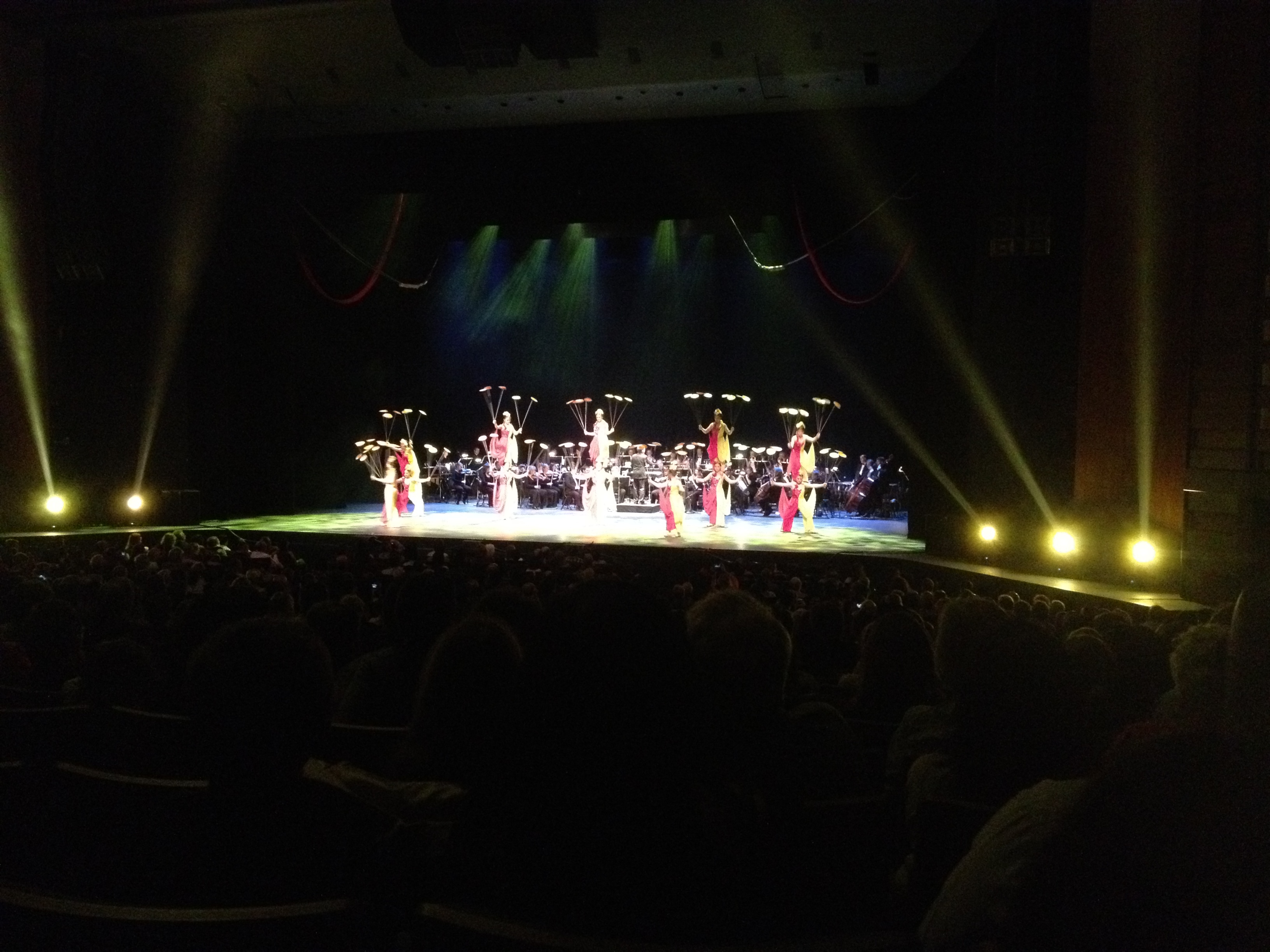
I had no idea what to get my mother for Mother’s Day. On Thursday, I decided instead of something superficial, I’d give her a night of entertainment, an experience. That’s how I live my life! Somehow I had managed to score tickets to the National Chinese Acrobats’ Saturday evening show at The Sony Centre. We had pretty decent seats for last minute.

We were actually much closer than this photo makes it seem.

The Acrobats were collaborating with the Kitchener-Waterloo orchestra, the same group that I had seen perform the Final Fantasy Distance Worlds concert for my birthday. The acrobatic stunts kept me on the edge of my seat the whole time. Man, did some of those feats make me nervous!

Even with all the visual distractions, I was really appreciating the classical works performed by the symphony. They played some classics like Stravinsky’s Firebird and Berlioz’s Hungarian March. It irked me a little when people clapped (although understandable) during some of the beautifully quiet string solos and passages. It was an experience that was both aurally and visually appealing. Mom enjoyed it, and I hope to take her to experience more of what Toronto’s entertainment scene has to offer!

Here’s a Youtube video I found of the acrobat troupe rehearsing.

The Rest is Noise: New Appreciation of 20th Century Music


The Rest is Noise by Alex Ross is an interesting summary of 20th century (classical) music. I purchased this book in my first or second year of University but was too intimidated to read it. I’ll have to admit, it is written in very flourished language and sometimes I had to look up the definition of some words. If anything, this book has given me a greater vocabulary to become a better music writer. At almost 600 pages, it took me well over a month to read. I purposely read it slowly so that I could absorb and retain as much of it as possible.

The book begins with a mention of Richard Strauss’ Salome and ends with an epilogue that mentions how minimalist influences have spread to the likes of Bjork and Radiohead.

The vividly written narrative highlights the lives of 20th composers; from life to death and their take on each other’s music. They are just like us in the sense that they often don’t understand each other’s music.The book beautifully describes some of the most important works of each composer and the society’s reactions to them. It’s funny because you learn who was in with dictators like Hitler and learn what happened after their reign was over. It dances around everybody who’s helped shaped the 20th century from painters, writers to the events and wars that molded what we are today. In a book about music, I think I learned more about 20th century history than I have ever known.

And if the book wasn’t enough Alex Ross also runs http://www.therestisnoise.com/ which has more to do with 20th century music as well as listening samples.

Final Fantasy Distant Worlds Was Awesome

Crappy iPhone photo

Last night I went to see an orchestra play music my favourite series of video games Final Fantasy. The tickets were a birthday present from my boyfriend. It’s one thing to hear the music in game, but it’s a completely different experience to see it all live. The composer Nobuo Uematsu was even in attendance.

random video of a similar performance

They have a different orchestra for every location they play in; probably because it’s not financially viable to fly 70 people everywhere. It was conducted by the famous Arnie Roth who conducts mostly video game concerts. How do I make that a real career? Video game footage synced perfectly with each piece they played and I’m pretty curious as to how they did it. It is an amazing spectacle. I should have taken a camera, but I am really glad I didn’t because I wasn’t distracted by anything while I was taking it all in.

They played all my favourite songs (even the Chocobo theme) and ended with an epic singalong to SE-PHI-ROTH. It was one of my favourite nights in a long time!

Side note: My back tattoo seems to match the Distance Worlds logo.. sort of.

Surviving Music Festivals

Random photo of me and Montreal's Honheehonhee

Canadian Music Week was keeping me busy last week, hence the lack of blog posts. This year, I didn’t want to bother any of my Toronto friends with crashing on their couches so I commuted back and forth. I was kind of like Cinderella, disappearing to catch the last bus at 1:20am. I’m pretty exhausted but here is how I survived the past week.

30 Day Practise Challenge: Half-Way Point


Only half the month has passed and I have already failed. My excuse, I didn’t feel very well. Whether that is true or not I used to be able to go to class with a fever, so not practicing because of a stomach cramp seemed so trivial. There has also been days where I did in fact challenge, but they didn’t last my original guidelines of an hour. The puppy would be too distracting, my iPad ran out of battery etc.

I should have some sort of failing the challenge, but having to blog about it is punishment itself. I failed.

However, I will keep going at it. I was not neccessarily out to just do this for 30 days, but to hopefully build better lifetime habits. I don’t want to forget how to play piano. As I get older and busier, I want to know how to be able to schedule time for the keys. I’ve decided in my lifetime I’m going to learn Chopin’s entire repertoire and Bach’s WTC amongst other pieces.

This has not only been a return to a skill but a return to having an outlet to relax and speak some emotion non-verbally. Not only will this happen this month, but it will be a part of future months to come.

Resolutions are Stupid


Happy new year!

A new year is time to reflect on the year before; the trials, the happiness and the newly discovered. It’s a time to put behind certain things and start with a clean slate. For most of us, we make promises to ourselves, most of which we won’t keep in the form of resolutions. Many of these resolution’s often don’t make it to the end of the month.

This year, I’m not out to make these promises to myself.

How to Avoid Carpal Tunnel as a Musician


I’ve been a musician all my life, but I didn’t start to have problems until I started hard 4 hour practicing when I was in university. At the end of my university journey I was experiencing pains in my middle finger and wrists. All those nights practicing passages and octaves 100 times had put a tole to the health of my limbs. I’ve done some therapy and research, and here are some tricks I have been using to prevent some of the pain of repetitive activities. Most of these can be applied if you spend too much time on the computer as well.

Sometimes You Need Time Apart From Something to Miss It

If you were some how misled here and think this is some relationship article look away now. I’m far over my breakup that happened 3 months ago.


Since I was around 5 or 6, I played the piano. I know I’m Asian but it was never something I felt like I was forced to do. I had thoroughly enjoyed it from the beginning. Me and my sister both played but she wasn’t nearly as patient enough to continue and after grade 8 we were allowed to quit if we felt like it. I continued. Hell, I had to fight my parents to let me pursue it as a degree in grade 12 when everyone else was applying to be on their way to be a businessman, doctor or scientist. I just wanted to make music. I practiced 3-4 hours a day to make the auditions. I got into Laurier and skipped my Western audition when I was accepted into my first first pick of schools, University of Toronto.