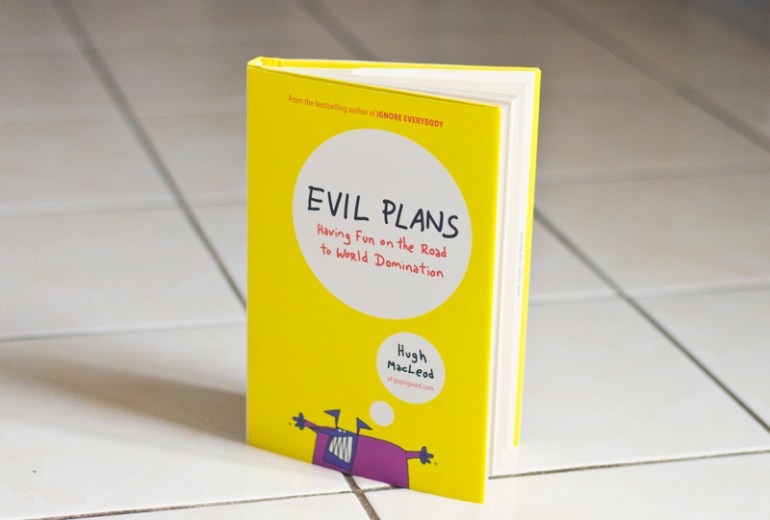
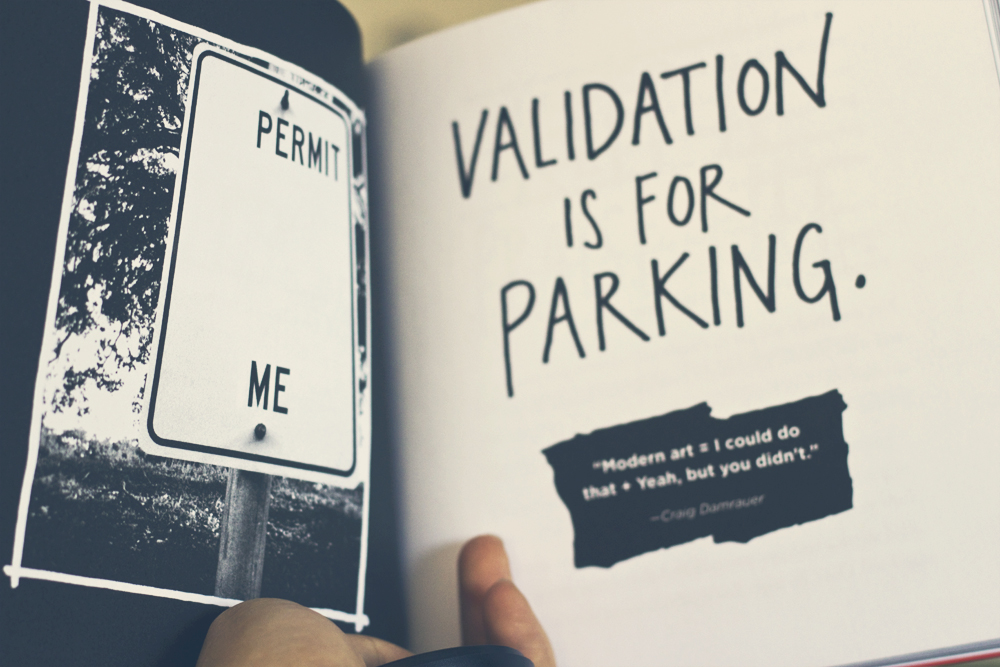
“Evil Plans- Having Fun on the Road to World Domination” is a cleverly titled book from comic writer and entrepreneur Hugh MacLeod. In fact, I actually discovered the book because it was sitting in the discount book section at Chapters and it sounded both adorable and intriguing.
To those unfamiliar, MacLeod is the artist behind gapingvoid.com. He creates original art for businesses in hopes to spark creativity, not sit in the background like the majority of mountain-climbing motivational posters.
In Evil Plans, he encourages those who are unhappy in their careers to take the risk of leaving and to figure out their life calling aka “evil plan”. The book is written in short chapters, or tips which are then elaborated on with examples and anecdotes. Oh and of course MacLeod’s signature comics.
I think my favourite tip by far was:
“Don’t worry if you don’t know absolutely everything before starting out.”
It’s something many of people struggle with (I know I do) when changing career paths, or starting their own businesses. However as MacLeod states later in the chapter,
“Interesting destinies rarely come from just reading the instruction manual.”
We may not be the most skilled or talented in whatever it is that we enjoy doing, but it doesn’t validate whether we’re able to do those things. The choice we can make is to find something that matters to us and well, just do it.
I’ve never really considered myself to be a writer. I sort of just fell in to it through blogging. I’m continually growing, finding my style and turning to others for inspiration. I read obsessively about anything and everything.
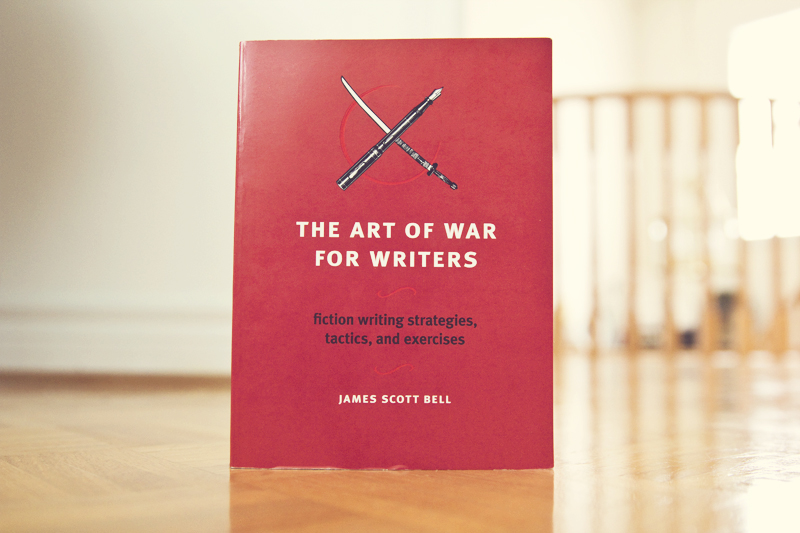
I picked up The Art of War for Writers, mostly because it would look awesome on my someday office desk. It wasn’t until recently that I picked it up and read it.
The little reference book by James Scott Bell focuses mostly on novel writing but a lot of it can be applied to other circumstances. Like the title of the book hints, it compares writing a novel and getting it published to fighting in a war.
There are three sections in the book. Reconnaissance deals with the mental game of writing. This was probably my least favourite section as I found it obvious and fluffy. It might be a proper push for those who are afraid to write in fear of judgment. As a blogger, I feel like this fear is close to non-existent or I wouldn’t be a very good blogger.
The Tactics, the most resourceful section, is loaded with tips to improve as a novel writer, many of which can be translated into writing in general. One of my favourites tips is when you have writers block, call on a word and its cousins (synonyms or related words). They can strangely open you up to new pathways.
The final section is Strategy, where Bell gives tips on entering the publishing world including finding the right agents.
The book reads a lot like a series of 78 short blog posts. They get the point across and there are plenty of examples from existing fiction. I recommend this book to any writers (not just fiction) looking for quick tidbits of inspiration. Bonus, the book has a lovely design.
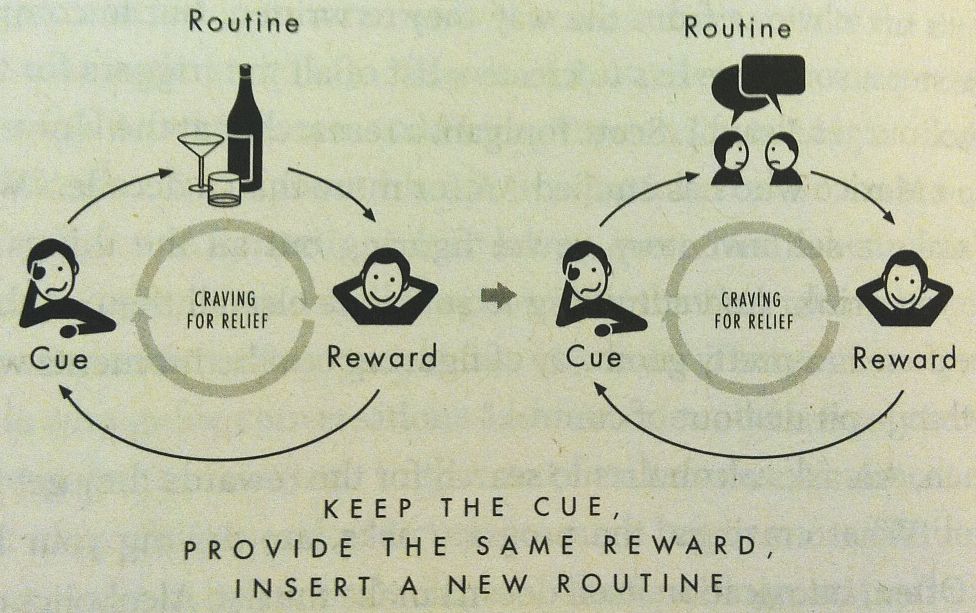
In The Power of Habit, Chris Duhigg looks at how the smallest act of habit can have a huge impact on our lives. It also delves into how businesses build marketing plans around our studied human habits. For example, when you walk into a grocery store the first thing you see are fruits and vegetables. They are purposely arranged this way so that we will buy healthy things first and can later convince ourselves to buy junk food.
He also looked into how Febreeze began from failure to a now conscious habit as well as how Target knows what you want to buy, before you even do. There’s plenty of unlikely anecdotes from Starbucks to Martin Luther King Jr and the Indianapolis Colts.
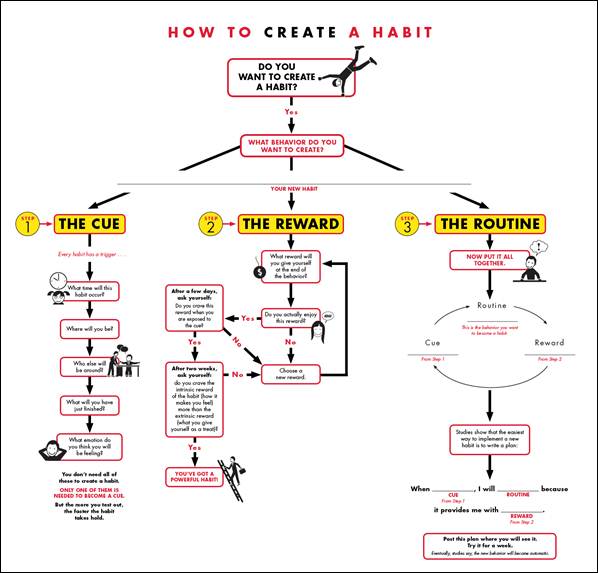
At the end of the book, there’s an appendix that teaches the reader how to integrate some new habits in their lives. There are 4 overall steps:
Identify the Routine – Look at any bad habits you want to change or a good habit you want to add in your life
Experiment With Rewards – Why did you do the bad habit? Did it give some type of satisfaction? Identify how to gain that sensation another way, or to replace it with another reward.
Isolate the Cue – What makes you keep up the habit? Perhaps a friend? Location or time of day? State of mind (ex bored)?
Have A Plan – figure out exactly how you are going to rid a bad habit or add a good one. When will you start?
I’m 25 so I’ve already sat through many lectures as a university student, college student and the conferences of music festival. By far the most inspirational has been Johnny Cupcakes‘ talk during Toronto’s NXNE. I could be biased because I am a huge fan of the T-shirts myself and it has become a large part of my own personal branding. However, I’ve seen a lot of my favourite bands, labels and companies speak over the years and few have come close to being so memorable, not to mention hilarious.
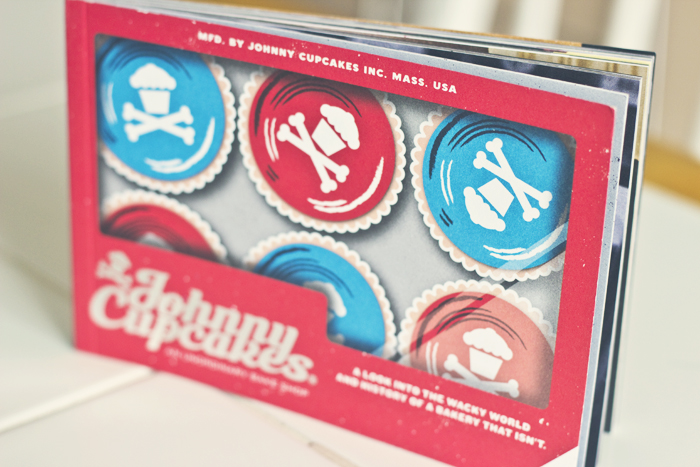
I had not planned to go to many panels this year during NXNE. I didn’t even look at the schedule. I thought I would need the sleep or extra time to edit photos. However, I ran into @plafleur and she had saved me this Johnny Cupcakes history booklet she found on the ground. Apparently it was in all the delegate bags (with exception to the media ones). I then looked at the program and discovered THE Johnny Cupcakes was doing a panel. Of course I HAD to go.
I didn’t really know what to expect. I’ve done festival conferences before and most panels just say what everyone else is saying (THE CLOUD IS THE FUTURE etc etc) or gloss over fancy points. Johnny Earle aka Johnny Cupcakes taught us to think outside the box, and showed us examples of how he has integrated this philosophy with his brand.
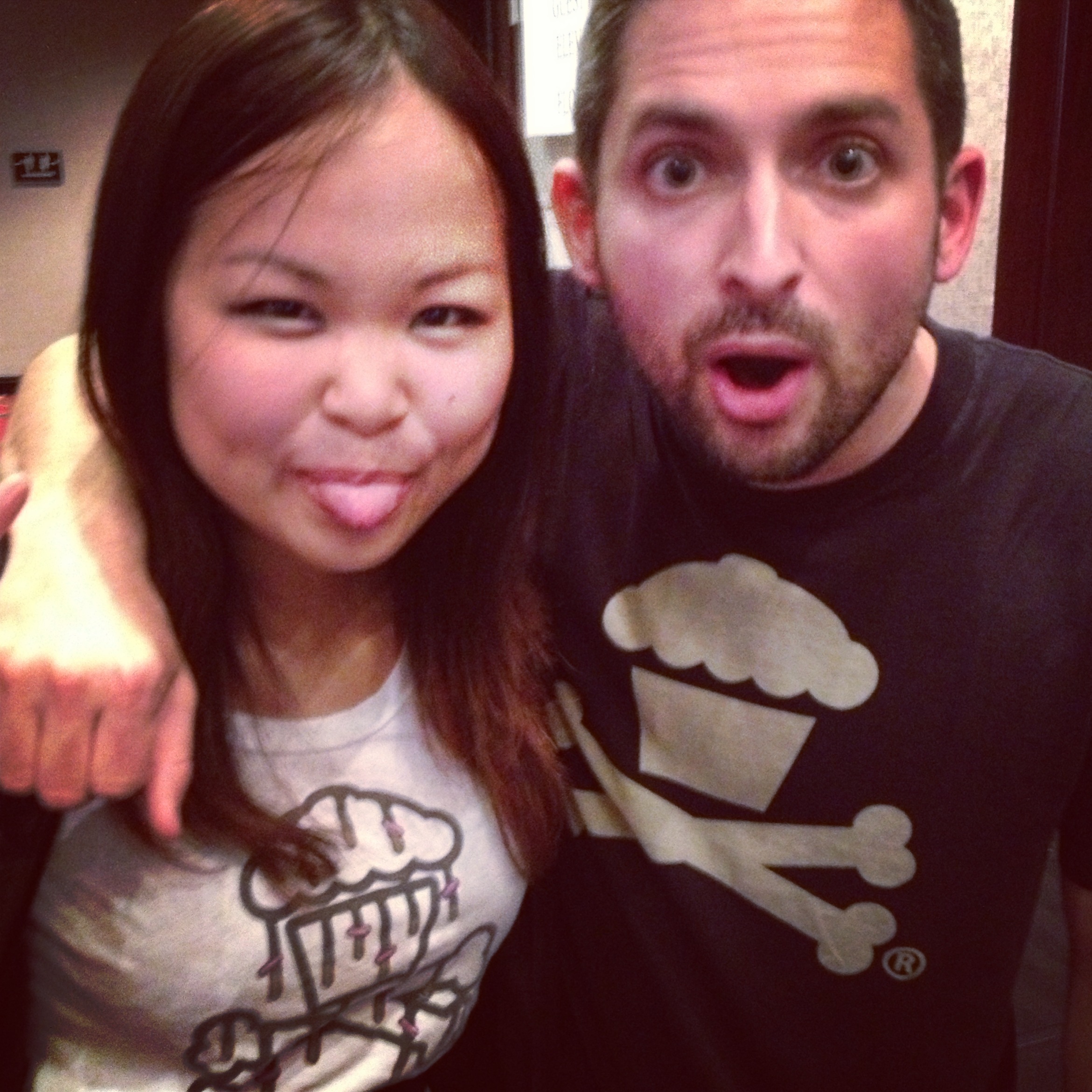
Johnny Cupcakes making his signature face and I!
Johnny began by telling us his history. He told us how at a young age he tried to make money in different ways such as selling his father’s tools at yard sales (he got in trouble of course) and selling candy, lemonade, whoopee cushions and yearbooks. The name Johnny Cupcakes was something random that co-workers at Newbury Comics had given him. He played with the idea and that’s how the shirts were born. He began selling these shirts to friends and it spread by word of mouth.
Johnny Cupcakes now has stores in Boston, LA, London and of course online, where they ship internationally. The stores all look like bakeries and smell like frosting. Everyday somebody walks in mistaking it for a place that sells food. Delivered packages look like presents and often come with trading cards. You’re meant to be treated like it’s your birthday. Johnny had set out to sell more than just cupcakes. He wanted to give people an experience and it’s a huge reason why he has been so successful. In fact, he even gave the audience members a glimpse of the experience. At the end of the lecture, he told us he had put little gifts under our chairs. When we reached down there was a little packet of stickers, buttons, candy and a trading card. He had even gone to the trouble of making sure we each had different trading cards so that we could trade with our neighbours. After the lecture, he hung around and took pictures with fans old and new. There was candy, but I got hungry that week and ate it
Anyways, I had written down a lot of the things Johnny said in a notebook but I lost said notebook on the streets of Toronto. It was later picked up by some American musician who brought it home with them. Long story. Here are a few important points I did remember about entrepreneurship and about life:
– Building a brand is hard work, Johnny Cupcakes mentioned that he doesn’t do drugs, drink or play video games. He had put all his energy on video games. He even hired his family to help.
– Connecting with people is important. When he sold things growing up he always went back to the people who had purchased something form him once. Then when he started making T-shirts it was their word of mouth that got things started.
– Small details make a big difference. If you buy a Johnny Cupcakes the tag is an oven mitt. Online boxes are patterned and in-store ones look like cupcake boxes.
– Name 10 things that make you unique. It’s good thing to brainstorm for both job hunters and brands.
– Weird is Good. It gets people talking. Johnny Cupcakes has sold breakfast themed t-shirts with breakfast, put shirts inside icing jars and much more.
– Make things exclusive and limited edition because people like what nobody else has. Johnny had declined offers to mass produce his shirts because he didn’t want to be another fast fad like Ed Hardy T-shirts.
Austin Kleon’s Steal Like an Artist has been sitting on my desk like a paperweight for quite a while. Today I decided to read it and discovered it to be the most invaluable paperweight to have in times of inspirational need. Kleon, an artist and illustrator, stated in the beginning of the book that all advice is autobiographical. The book focuses around 10 things he wished he had heard when he was younger. It’s advice that to a reader may seem obvious, but is often forgotten.
The book is small and around 150 pages, half of which are artistic scribblings and brainstorming of Kleon’s points. There’s even a “deleted scene” page at the back with images that didn’t quite make it. One of my favourite quotes from the book is
“You don’t put yourself online because you have something to say- you can put yourself online to find something to say”
. This resonated with me as an online writer both on this blog and over at Ride the Tempo. I never knew what I was doing when I started, but I haven’t stopped and never seem to be running out of ideas.
There’s a page in the book for everyone. There’s a page about embracing obscurity, productive procrastination and more. Everybody can use a bit of creativity in their lives. More pages from Austin Kleon’s book are available on his website.
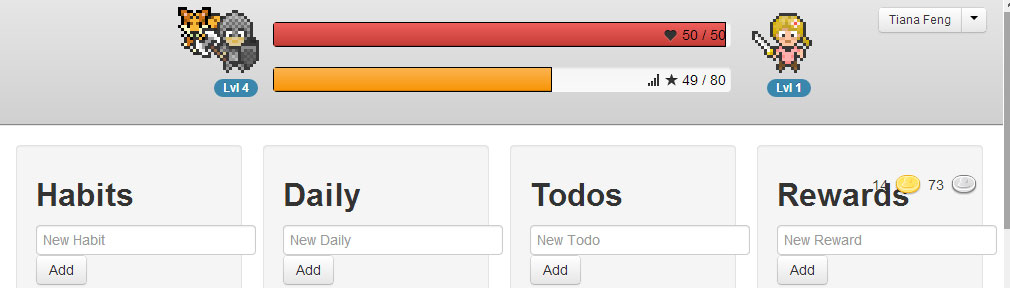
In the past, I have tried so many different to-list programs and apps, but none of those ever worked or I’d forget about them and just resort to the traditional pen and paper. That was until I discovered HabitRPG. I’ve been using them since the beginning of their Kickstarter campaign (which is now more than fully funded) and my productivity has certainly increased.
What’s cool about this to-do list and habit list is that it is like a game. There are a few game-like applications out there, but they are too much game. This one is simple, you gain experience points and gold and silver. These can be used to buy weapons and armour as well as any guilty pleasures you can custom define. For example, you can make that Game of Thrones episode cost 5 gold so you can feel like you earned it.
It runs on an honor system. You check off all the things you do right and take off points for what you do wrong. If you cheat, you’re just cheating yourself anyway. There’s also a Chrome Extension you can use to gain and lose points for vice and productive sites.
The site is still in it’s infancy with more upcoming features and a promised iPhone/Android app. They’ve just introduced a “party” feature so you can compete with your friends and perhaps do group challenges and boss battles in the future.
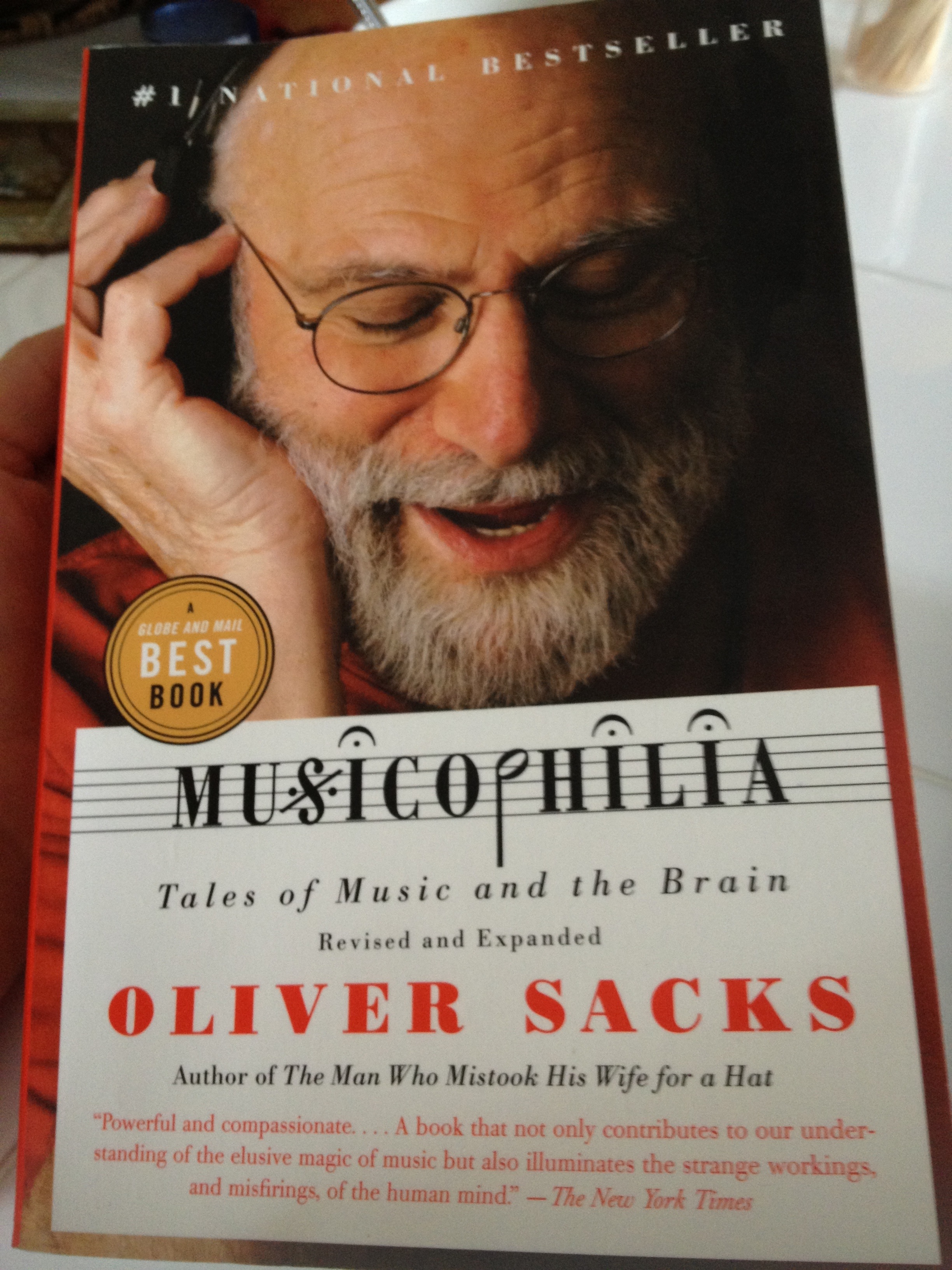
Musicophilia a book by neurologist Oliver Sacks had been a compulsive buy a year ago. Anything to do with music and the brain I find fascinating but a busy schedule had turned me away from a book that was 424 pages long and what I presumed would be written in flourished language.
I was surprised to find that it was written in a very easily digestible manner and extraordinarily fascinating. Sacks explored in great detail people’s mental afflictions and the heartbreaking affect music had on these people. I thought it was extremely spell-bounding how those who couldn’t even add 5 + 3 were exceptionally musical.
Musicophilia has 4 different sections full of their own emotionally drenched stories: 1. Haunted By Music– those that have very little control over the music in their lives. 2. A Range of Musicality– exceptionally musical people despite other impairments. 3. Memory, Movement and Music– music inducing memory and movement. 4. Emotion, Identity and Music– those that hardly know who they are but connect with music.
I have the “Revised and Expanded” edition so there are footnotes as long as half the page. They often include updates on his patients as well as easy to understand definitions of medical afflictions and terminology that the reader may not have known. Those who have a passion for psychology or cognitive science may find this book mesmerizing. There are plenty of examples that demonstrate the thought-provoking and mysterious powers of music. I don’t want to reveal too much in case you plan to read this book. One thing of note is that it is sub-titled Tales of Music and the Brain so expect it to be very anecdotal and not necessarily filled with tons of scientific analysis as one would presume in a cognitive science book.
Musicophilia really made me wish I had seriously considered pursuing (or perhaps continuing studies for) a degree in Music Therapy.
There’s many people in my life that I see on a daily basis. I smile at them. Sometimes we exchange greetings. On the rare occasion I even know their names. They’re not friends, but they are not complete strangers either. Or at least I don’t consider them so.
I saw this posted at my nearest train station.
This post is for all the not-so-strangers in my life. The morning coffee girl who knows my order before I say a word. The Santa Clause-like train conductor – who I think is named Stan – who greets me every morning. The man who owns the golden retriever who Teddy thinks is his best friend. It’s the kindness of these people that give me the positive energy I need to start my day. Thank you.
The book is geared towards business people who want to improve their presentations by including pictures that encourage audience involvement. The techniques are simple enough that they can be used by anybody who want to be a better visual thinker. Unfolding the Napkin is full of fun doodles, exercises and real life examples of where pictures were used to solve a major problem in major corporations. The book is divided into 4 lessons (complete with lunch breaks). The four parts make up the steps of visual thinking: Looking, Seeing, Imagining and Showing. The most helpful section to me was the Imagining section which introduced the SQVID method of thinking. It stood for the different ways of imaging how to solve a problem (although I’m not entirely what the acronym stands for). SQVID on opening a wine bottle
The book explains how modern day presentations all suck because they are often hundreds of pages of Power Point slides that mean nothing. It also delves into the psychology of how when something is computer generated and perfect, we tend not to question it. In contrast if we doodle an idea or a plan, there is imperfection and people will comment and give feedback. There is definitely truth in that idea, and hey, I like to doodle.
I recommend this book to anybody who makes presentations of any kind and wants to look beyond just Powerpoint. I’ve always been a visual learner and I think I may dive into some more of Dan Roam’s books. I’m especially interested in Blah Blah Blah which is geared more towards personal thinking than the board room. PS. I haven’t stopped on delivering you guys doodletastic posts. More to come soon.
I’ve had my wallet since grade 9 and since I’m 24, that was a long long time ago. It’s even had a hole in it for the last 5 years, but I felt no real need to get a new one.
I bought it during a childish and somewhat egotistic phase where I had to had my initials on everything. Tommy Hilfiger coincidentally used the letter “T” in their designs. When I look back at it, it’s pretty bulky and ugly but it held all the tidbits of my life, and would for the next 10 years.
Dad used to have the same tattered wallet for like 20 years (even though we would get him new ones) and I used to make fun of him for it. However, I understand now how hard it can be to let go. What we store in our wallets tells a story of who we are as a person. It’s often why we like to venture into the wallets of others.
Mine had memories of my first kiss, my first tattoo, and trips to china. There were pictures of people who I haven’t spoken to in years and buy-10-get-1-free cards from places I haven’t been to in years. It could probably tell you that I used to have a compulsive shopping phase, and that I like to hoard junk.
Today I got a new wallet as a gift, and I thought it was the perfect chance to start anew.
I was never really into overly girly wallets.
It’s much smaller than my previous wallet, so I couldn’t keep half the things I had in there. I’m not the same person I used to be, and my wallet doesn’t need to reflect that any more. A new story adventure is just beginning!



 , mostly because it would look awesome on my someday office desk. It wasn’t until recently that I picked it up and read it.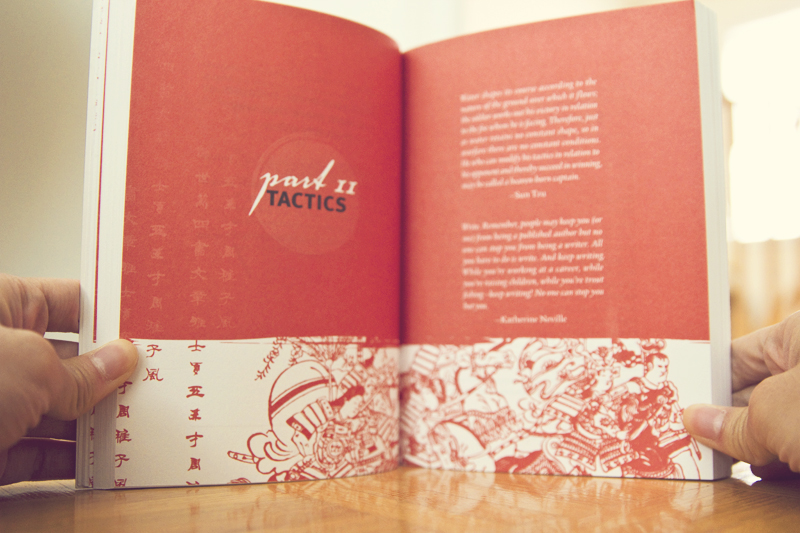





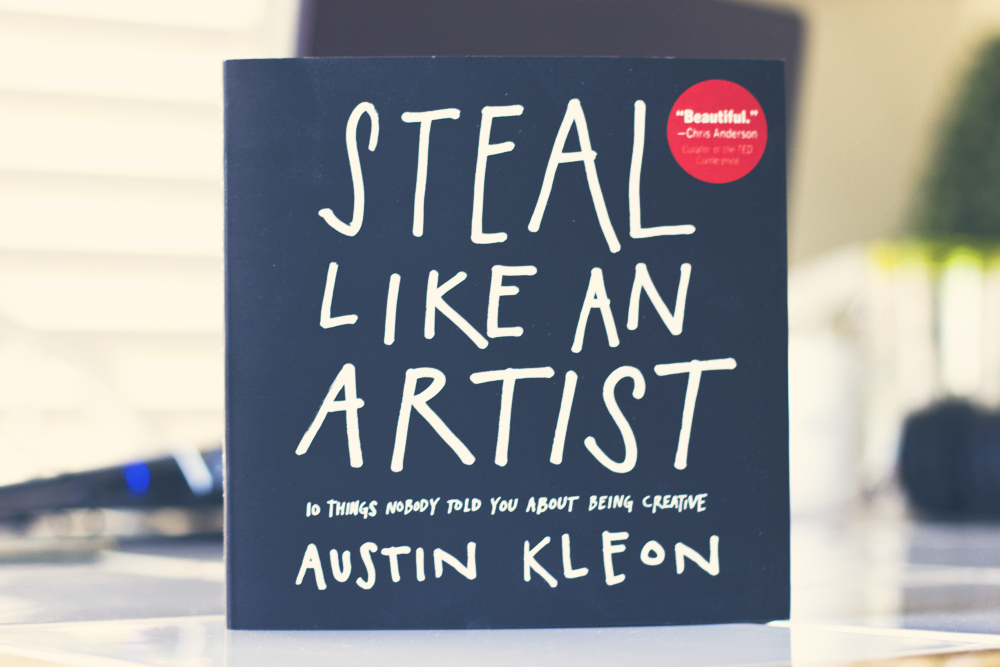
 has been sitting on my desk like a paperweight for quite a while. Today I decided to read it and discovered it to be the most invaluable paperweight to have in times of inspirational need.




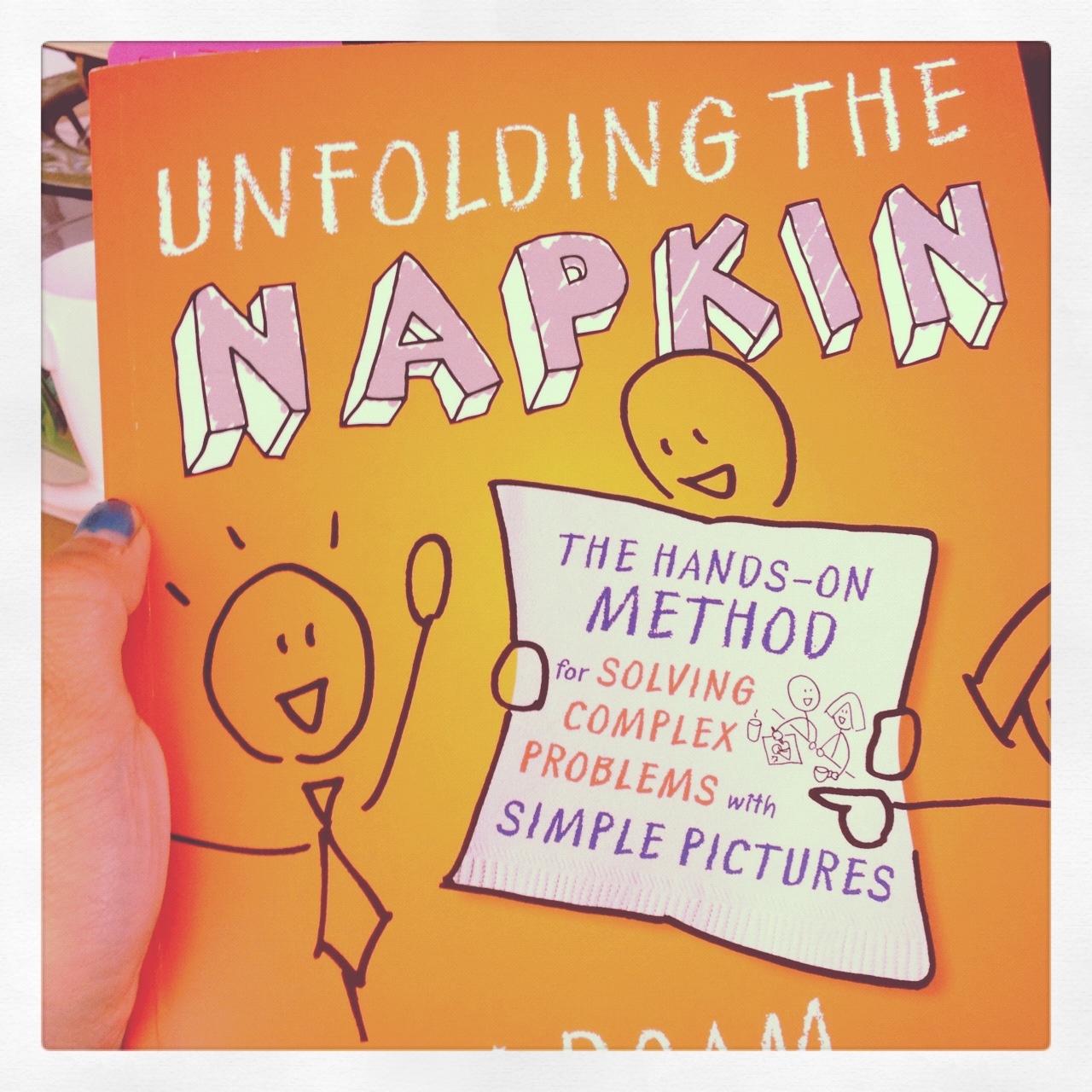
 , without realizing it is actually the workbook for his first book The Back of the Napkin. However, it doesn’t really matter as it works well as a standalone book.


 Tiana Feng