What’s Your Evil Plan?

IMG_4361

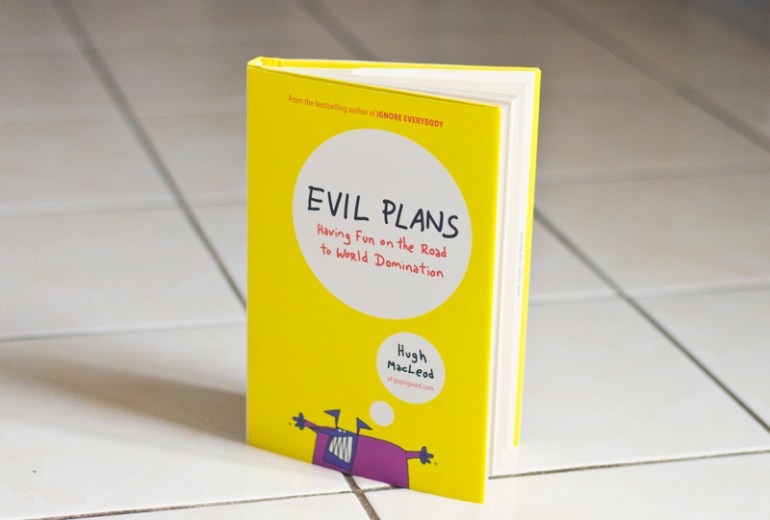
“Evil Plans- Having Fun on the Road to World Domination” is a cleverly titled book from comic writer and entrepreneur Hugh MacLeod. In fact, I actually discovered the book because it was sitting in the discount book section at Chapters and it sounded both adorable and intriguing.

To those unfamiliar, MacLeod is the artist behind gapingvoid.com. He creates original art for businesses in hopes to spark creativity, not sit in the background like the majority of mountain-climbing motivational posters.

In Evil Plans, he encourages those who are unhappy in their careers to take the risk of leaving and to figure out their life calling aka “evil plan”. The book is written in short chapters, or tips which are then elaborated on with examples and anecdotes. Oh and of course MacLeod’s signature comics.

IMG_4365

I think my favourite tip by far was:

 “Don’t worry if you don’t know absolutely everything before starting out.”

It’s something many of people struggle with (I know I do) when changing career paths, or starting their own businesses. However as MacLeod states later in the chapter,

 “Interesting destinies rarely come from just reading the instruction manual.”

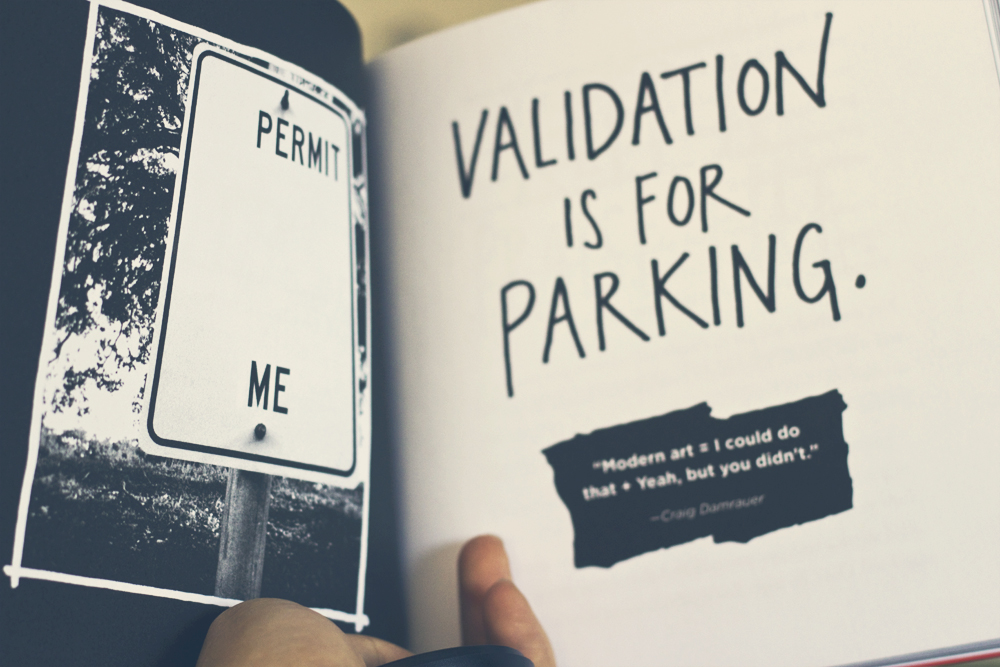
We may not be the most skilled or talented in whatever it is that we enjoy doing, but it doesn’t validate whether we’re able to do those things. The choice we can make is to find something that matters to us and well, just do it.

What is your evil plan?

IMG_4363

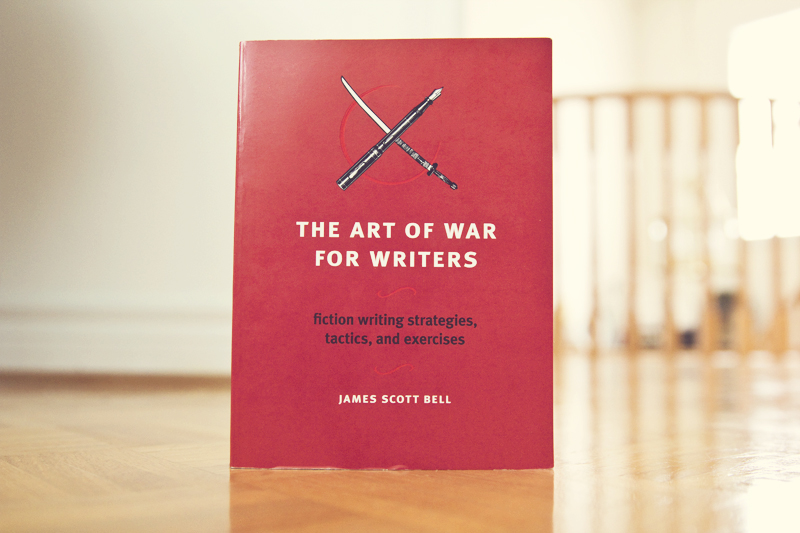
The Art of War For Writers

IMG_3718
I’ve never really considered myself to be a writer. I sort of just fell in to it through blogging. I’m continually growing, finding my style and turning to others for inspiration. I read obsessively about anything and everything.

I picked up The Art of War for Writers, mostly because it would look awesome on my someday office desk. It wasn’t until recently that I picked it up and read it.
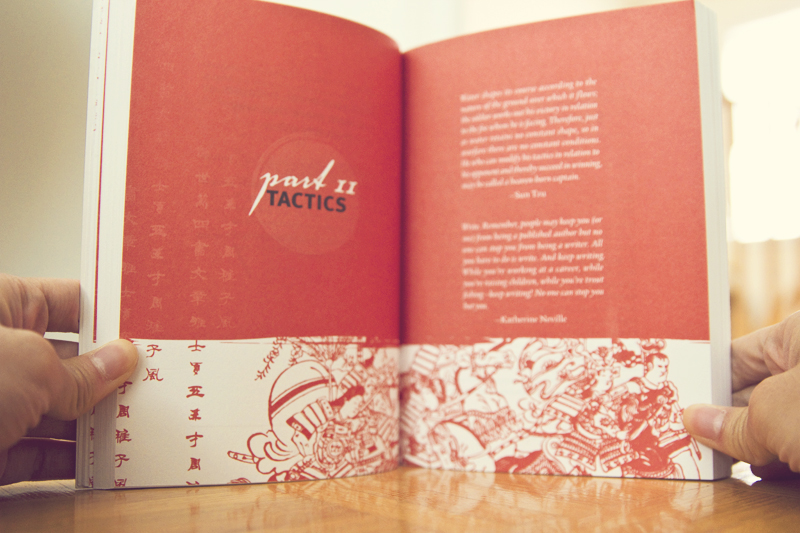
The little reference book by James Scott Bell focuses mostly on novel writing but a lot of it can be applied to other circumstances. Like the title of the book hints, it compares writing a novel and getting it published to fighting in a war.
IMG_3721
There are three sections in the book. Reconnaissance deals with the mental game of writing. This was probably my least favourite section as I found it obvious and fluffy. It might be a proper push for those who are afraid to write in fear of judgment. As a blogger, I feel like this fear is close to non-existent or I wouldn’t be a very good blogger.
IMG_3722
The Tactics, the most resourceful section, is loaded with tips to improve as a novel writer, many of which can be translated into writing in general. One of my favourites tips is when you have writers block, call on a word and its cousins (synonyms or related words). They can strangely open you up to new pathways.

The final section is Strategy, where Bell gives tips on entering the publishing world including finding the right agents.

The book reads a lot like a series of 78 short blog posts. They get the point across and there are plenty of examples from existing fiction. I recommend this book to any writers (not just fiction) looking for quick tidbits of inspiration. Bonus, the book has a lovely design.


The Power of Habit

powerofhabit

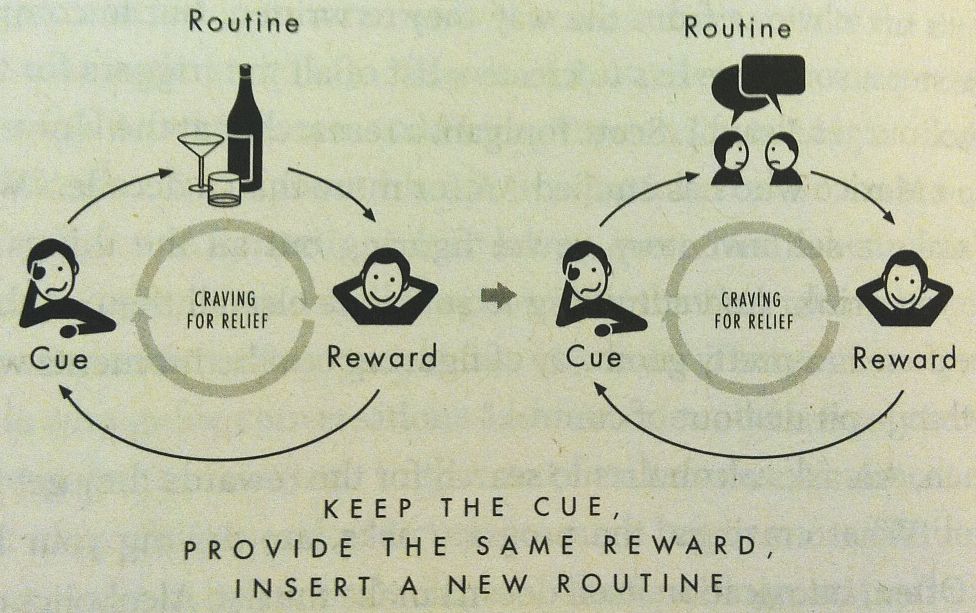
In The Power of Habit, Chris Duhigg looks at how the smallest act of habit can have a huge impact on our lives. It also delves into how businesses build marketing plans around our studied human habits. For example, when you walk into a grocery store the first thing you see are fruits and vegetables. They are purposely arranged this way so that we will buy healthy things first and can later convince ourselves to buy junk food.

cue


He also looked into how Febreeze began from failure to a now conscious habit as well as how Target knows what you want to buy, before you even do.  There’s plenty of unlikely anecdotes from Starbucks to Martin Luther King Jr and the Indianapolis Colts.


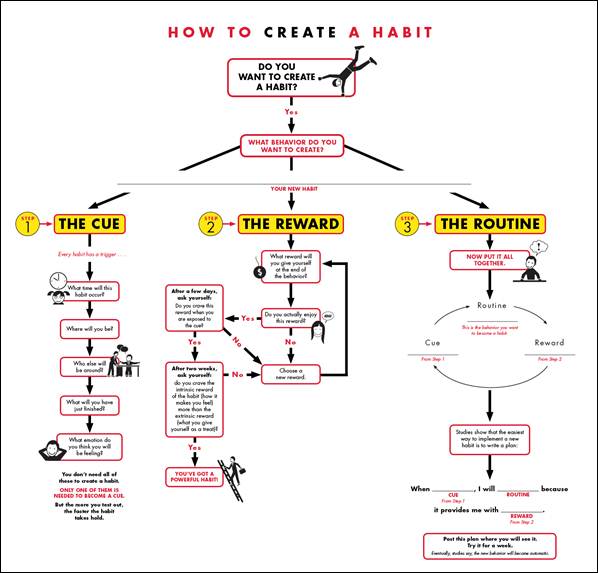
howtocreateahabit
At the end of the book, there’s an appendix that teaches the reader how to integrate some new habits in their lives. There are 4 overall steps:

  1. Identify the Routine – Look at any bad habits you want to change or a good habit you want to add in your life
  2. Experiment With Rewards – Why did you do the bad habit? Did it give some type of satisfaction? Identify how to gain that sensation another way, or to replace it with another reward.
  3. Isolate the Cue – What makes you keep up the habit? Perhaps a friend? Location or time of day? State of mind (ex bored)?
  4. Have A Plan – figure out exactly how you are going to rid a bad habit or add a good one.  When will you start? 

The Happiness Project

thehappinessproject
I recently read through Gretchen Rubin’s The Happiness Project and enjoyed her journey in the pursuit for happiness. The different chapters reflected the months of the years and the many challenges she added each month. I read a month a day so that I’d have time for some of it to sink in instead of a marathon read through the entire thing. I enjoyed the way it wasn’t written in a how-to-way but instead chronicled Rubin’s own journey in hopes that someone might find their own inspiration in her examples. Like the author of the book, I am not depressed or anything but it’s always interesting to look at what someone else has done to improve their quality of life and be happier.

Here a few of my favourite points:

  1. “You can choose what you do; you can’t choose what you like to do”
  2. “Act the way you want to feel”
  3. “Be Tiana”

Numbers one and three are most likely to collide with each other. In fact a lot about being happy has to do with understanding your own desires. When I was younger and started blogging, I wanted to be a fashion/make-up blogger turned socialite type deal. But that wasn’t really me. In fact I don’t really care that much about fashion. My passion was music, and that’s where it led me today. Other things I don’t like include history and geography and no matter how hard I try, I’ll never find any joy in being immersed in it. It’s important when you are making decisions to consider if you’re making them for yourself or because you think that’s what you’re supposed to do.

In reading this book, I began thinking a lot of my own happiness. Appreciating the joys in life rather than the terrible moments is ideal for a good quality of life. I know this simply from observing my dog running around the yard in circles. Something stupid, that is bound to make me laugh. Laughing out loud is important and in this fast-moving world, it’s easy to forget that and let life past by in a flash.

The Future of Virtual Worlds

readyplayerone
What would it be like if we were more obsessed with a virtual reality than our own? This is what Ernest Cline explores in his novel Ready Player One.

Presently we have small virtual worlds in the form of MMORPGS such as Warcraft, Everquest and Minecraft but Cline takes it further with OASIS (Ontologicaly Anthropocentric Sensory Immersive Simulation), an online world that encompasses new worlds and the fictitious ones we know from movies, games and memories. The year is 2044 and the world has run out of oil supply and faced with poverty. The world inside OASIS, where one could be who or what they wanted, became more appealing than the everyday world.

I wonder what the future of virtual worlds will be like for us. There are already people where Warcraft or Second Life takes up most of their lives. In the OASIS, making money online was synonymous with making money in real life. There was even the option to go to school online and students forced through software to pay attention. In 2010, Woodbury University in California tried to do something similar in Second Life but was banned by Linden Labs.

The OASIS Cline created was more than a game. It was a place to chat, browse the web, read books, explore and interact with many worlds without ever leaving your house. All you needed was a pair of gloves, the visor and the console. It may seem like it will be quite some time before we reach that type of technology but Google Glasses will soon be a reality.

As our world becomes increasingly more plugged in, I can only wonder what life will be like 30 years from now.

How To Create A Mind

IMG_8989

Fascination in the mind led me to read Kurzweil’s How to Create a Mind: The Secret of Human Though Revealed. The first part of the book goes into compelling detail about how the human brain stores and analyzes information.

The later half philosophises artificial intelligence. It questions and eloquently investigates the ethics behind the artificial mind. If a computer had the same power as human brain, should it be considered conscious? Kurzweil thinks it should be and makes many references to the Jeopardy winning robot, Watson.

He also questions free will, making allusions to the fact that not all human decisions are done of free will. Often we confabulate to make it seem like something was done on our free will. For example, our decisions are often made based on our past experiences. Therefore our past is influencing our decision and free will is one devoid of influences. It thought this was a quite perplexing thought.

Kurzweil explained that Watson (and even iPhone’s) Siri is able to learn from the environment and as technology grows they will be able to learn things the same ways as humans do. If that happens, would we treat computers like humans? Only in time can we truly answer that question.

For anybody who’s interested, here is a lecture Kurzweil did at Google on the topic:

We Remember The Sound Of Our Keys

keys

People are able to distinguish between songs through earworms. However, there’s also a whole world of sounds and soundscapes we are exposed to on a daily basis. In Murray Schafer’s A Sound Education, he explores these every day sounds through 100 exploratory exercises.

asoundeducation

I had the pleasure of meeting Schafer in my third year of University. Our class delved into a few of these personally with Schafer. The most memorable was this particular exercise involving keys. A group of five people put their keys into a pile. Schafer then jingled all of the keys behind their backs and asked the participants to identify their own. Everybody had the right keys.

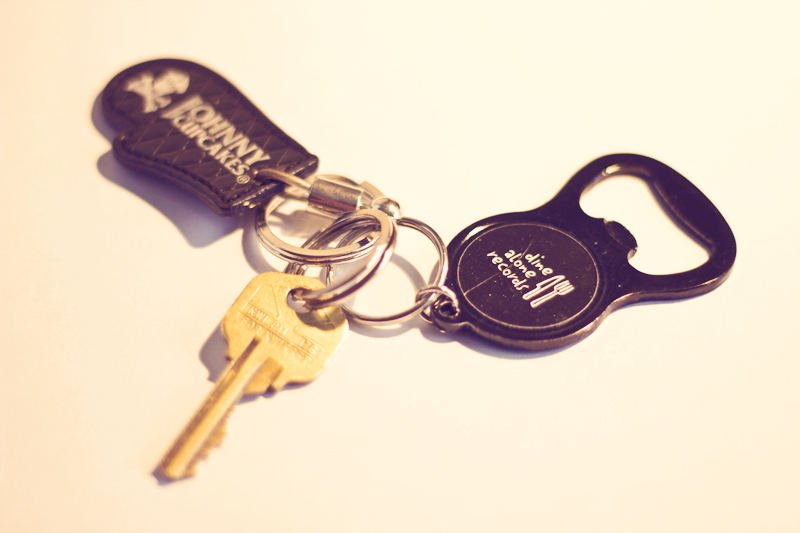
The sound of our keys is not something we really think about but we hold them every day, listen to them jingle in our bags and pockets as we look for them and open our doors. Personally, my keys are pretty boring. I don’t own a car or a bike so I only have one key on my chain with a Dine Alone beer opener and a Johnny Cupcakes oven mitt. Instead of nice jingling, I hear simple clanking.

What do your keys sound like? I dare you to try this exercise with a few of your friends and I’m sure they will guess the right keys!

Side note: This book  seems to be hard to find, so if any of my Toronto friends want to borrow this I have a hard copy!

Mr. Penumbra’s 24 Hour Bookstore

mrpenumbra I always wondered what it would be like to write fiction that took place in today’s world. Robin Sloan pulled it off in his mysterious novel Mr. Penumbra’s 24 Hour Bookstore.

The premise is the main character, Clay Jannon, works in a bookstore that is open at all hours of the night. He soon realizes the books in the “Wayback” catalogue are full of strange codes instead of text and story. There is a strange cult of people that take out these books and of course Clay decides to find out more about them.

Sloan writes in a way that is so believable I had to look up if some of the things actually exist. It takes place in a strange San Francisco book store, one of the characters work for Google and it also involves a reddit-style mystery man.

It’s a short easy read for those looking for a geeky codebreaking adventure in the present-day. It wouldn’t surprise me if this ever turned into a movie one day.

The Power of Why

thepowerofwhyAs adults, we have grown up thinking that questioning the norm is faux-pas. As a child we go through school systems where the one that asks the most questions is usually the most annoying kid. The one with the bad grades. We have learnt to spew out the right answers for good grades without much questions. It’s the way we’re taught, to get all As in order to get into a university, get a job etc. This creates generations of people who forget how to be curious.

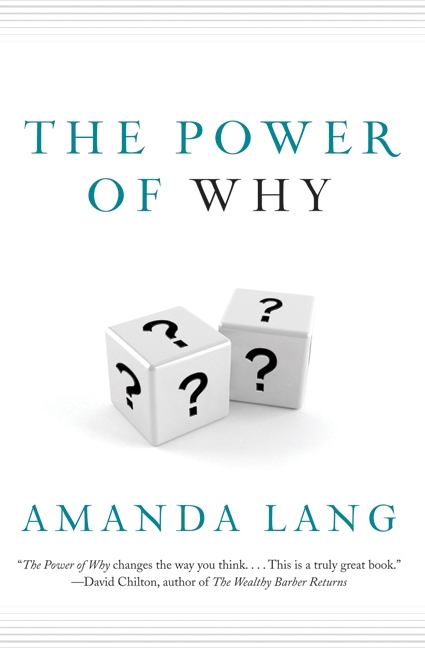
In Amanda Lang’s The Power Of Why she demonstrates the importance of asking questions. She uses what is called the ctrl + alt + del method of thinking without boundaries set by what we think we already know. The book has some cool examples of inventions such as the Soccket and the Saw Stop that were developed because their inventors failed to believe that it was impossible. Instead they asked “Why not?” and found out ways around it.

I was one of those people who didn’t really question much in school but I grew more curious after reading this book. It’s a good read for people who want to learn how to be more innovative or look at the world a little differently. Every once in a while, we should remember what is like to be that 3 year old kid who can’t stop asking Why?.